




 Showcasing 29+ Years of Innovation in Strength Training Equipment

The leg press is one of the best exercises for building lower-body strength, but only if you use proper form. Good technique lets you load heavy weight safely, target the right muscles, and protect your knees and lower back.
In this post, we'll break down everything you need to know about proper leg press form, from setup to execution, the common mistakes to avoid, and how foot placement changes the muscles you work.
What Is a Leg Press Machine?
A leg press machine lets you move heavy loads through a controlled path while your spine stays supported. That makes it a safe, effective way to build the quads, glutes, hamstrings, and calves, and to strengthen the legs without loading the spine the way a barbell squat does.
How to Perform a Leg Press with Proper Form
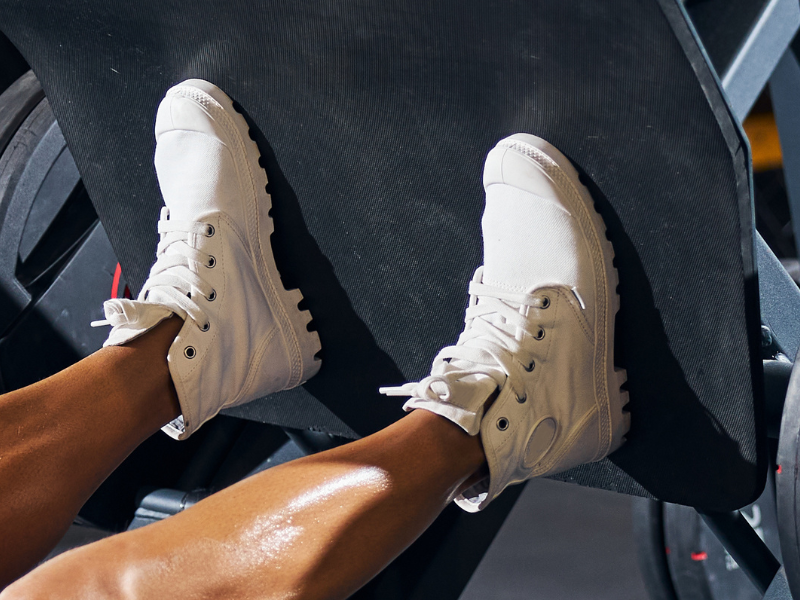
Follow these steps for safe, effective reps every time.
Step 1: Preparing for the Exercise
-
Adjust the seat and backrest so you are comfortable and well supported.
-
Choose your foot position and place your feet evenly on the platform.
-
Press the platform up and release the safety catches.
-
Hold the handles lightly and keep your elbows unlocked. A good starting position sets up good technique.
Step 2: Performing the Leg Press
-
Inhale as you slowly lower the platform, bending your knees and hips while keeping your torso still.
-
Lower until your knees reach about a 90-degree angle.
-
Press evenly through your heels and exhale as you straighten your legs, stopping just short of locking your knees.
-
Repeat with the same smooth, controlled motion, keeping your hips and lower back flat against the pad.
Common Leg Press Mistakes to Avoid
-
Knees caving in or bowing out: keep your knees tracking in line with your toes.
-
Bouncing the weight: lower under control instead of dropping and rebounding at the bottom.
-
Rounding the lower back: keep your hips and lower back flat on the pad; if your pelvis tucks under at the bottom, reduce the range or the weight.
-
Locking the knees: stop just short of full lockout to keep tension on the muscles and protect the joints.
-
Knees passing too far forward: adjust the seat so your knees stay in a safe range through the rep.
Focusing on form gives you better results and helps prevent injury.
Leg Press Foot Placement (Quick Guide)
Where you place your feet changes the muscles the leg press works. Here is a quick reference; for the full breakdown, see our guide to leg press foot placement.
|
Foot position |
Targets |
|---|---|
|
Standard (hip-width, middle) |
Balanced quads, glutes, hamstrings |
|
Low on the platform |
More quads |
|
High on the platform |
More glutes and hamstrings |
|
Wide stance |
Inner thighs and glutes |
|
Narrow stance |
Outer quads |
Powertec Leg Press Equipment
Powertec Leg Press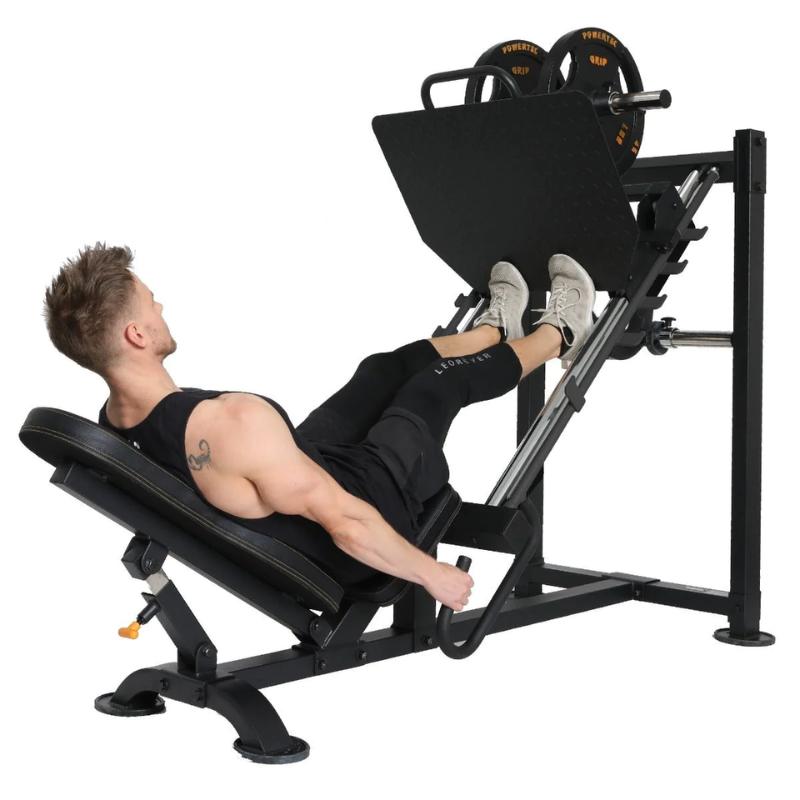
The Powertec Leg Press is a compact, high-capacity leg press built for home gyms. Key features:
-
Safe and compact with a high weight capacity
-
Dual safety catches for security
-
Large foot plate accommodates different foot positions
-
Adjustable backrest enables comfortable leg pressing
-
Smooth carriage system for quality pressing motion
-
Stainless steel weight horns for durability
-
Commercial grade padding for longevity
-
3 height settings
With its robust build, safety features, and adjustable design, this leg press enables efficient, safe strengthening of lower body muscles at home.
Workbench Leg Press Attachment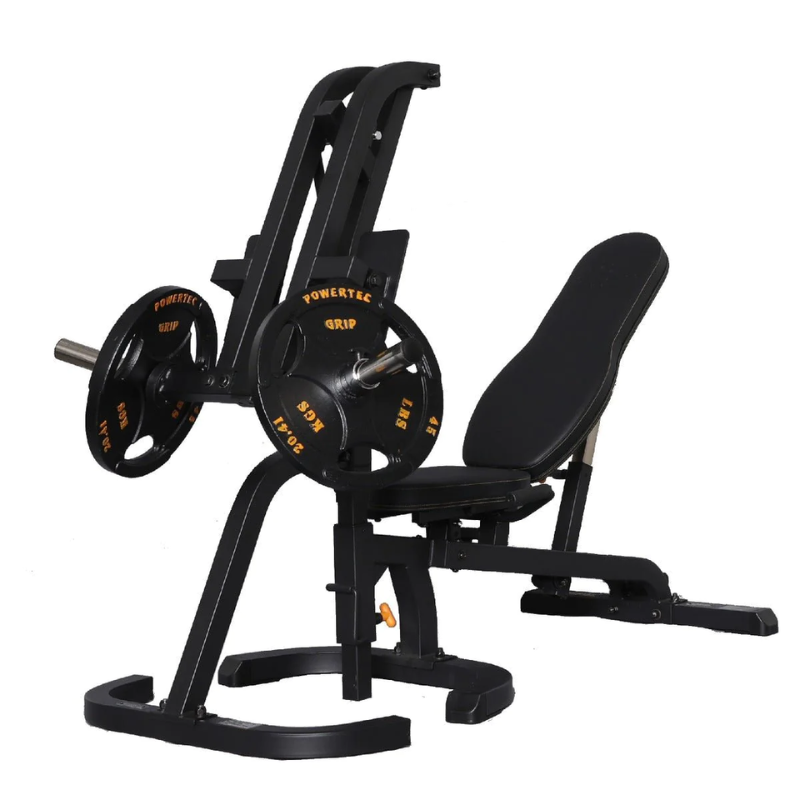
The Workbench Leg Press Attachment provides full leg press capability as a compact add-on.
Some key features and benefits of this attachment include:
-
First Levergym leg press designed for full-range leg press action
-
Most compact leg press option in the market
-
Angled stainless steel weight horns hold weight plates securely
-
Fits Powertec Workbench products from 2008 onward
-
27" x 41.5" x 55.3" dimension fits; 16" clearance needed
-
Modular design that expands workout options
Build Stronger Legs at Home
Proper form plus the right machine is what makes the leg press so effective. The Powertec Leg Press and the Workbench Leg Press Attachment let you train safely and heavy at home.
To learn more about Powertec home and commercial gym equipment, call our team at (800) 250-6665.
FAQs on Proper Leg Press Form
What muscles does the leg press work?
The leg press mainly targets the quadriceps, and also works the glutes, hamstrings, and calves. Changing your foot placement shifts the emphasis between these muscle groups.
How low should you go on the leg press?
Lower until your knees reach about a 90-degree angle, or as far as you can go while keeping your lower back flat on the pad. Going deeper than that often causes the pelvis to round, which stresses the lower back.
Should you lock your knees on the leg press?
No. Stop just short of full lockout at the top. Locking the knees shifts stress onto the joints and takes tension off the muscles you are training.
Is the leg press good for beginners?
Yes. The supported, controlled path makes the leg press a safe way for beginners to build lower-body strength, as long as they use proper form and a manageable weight.
How much weight should I use on the leg press?
Start with a weight you can control for your target reps with full range of motion and good form, then add load gradually as you get stronger.
Leave a comment