




 Showcasing 29+ Years of Innovation in Strength Training Equipment

Your leg press foot placement is one of the simplest ways to change the results of the lift. Move your feet up, down, wider, or closer, and you shift the work between your quads, hamstrings, glutes, and inner thighs. Foot positioning on the leg press is not just about comfort, it is a strategic choice that decides which muscles you build.
This guide breaks down every leg press foot position, the muscles each one targets, and how to choose the right placement for your goals.
How Leg Press Foot Placement Works
The leg press machine is a staple in strength training, built to load the powerhouse muscles of the lower body. Unlike free-weight squats, it provides controlled, supported movement, which makes it suitable for lifters of all levels.
Because the platform is large, where you place your feet on it changes the joint angles and the muscles doing the work. That is why the leg press is so versatile: a few inches of foot position can turn it into a quad exercise, a glute exercise, or a balanced lower-body builder.
Leg Press Foot Positions and the Muscles They Target
High Foot Position
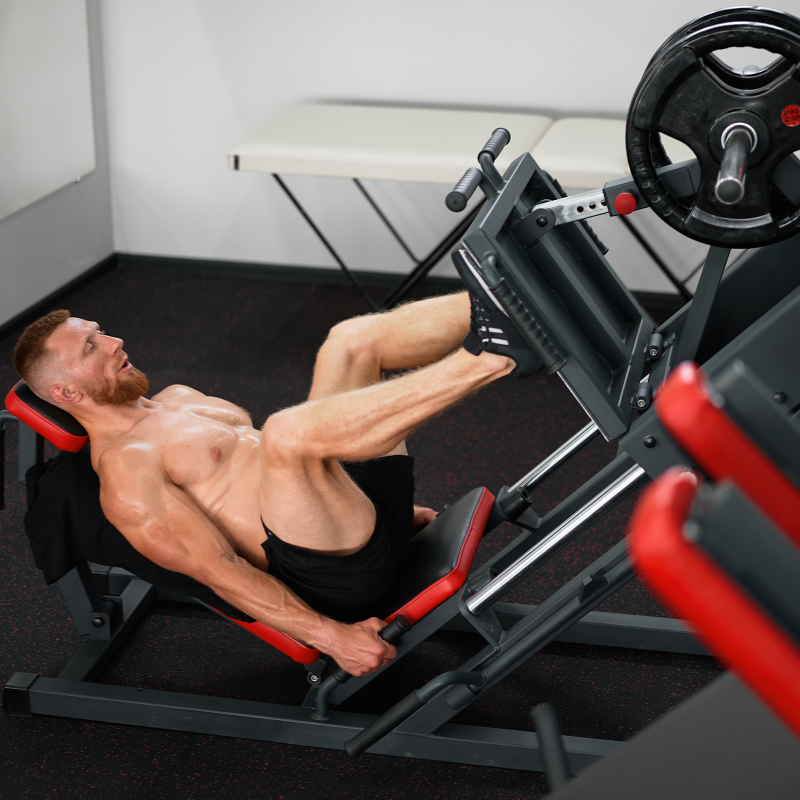
Placing your feet higher on the platform shifts the focus to your hamstrings and glutes and reduces quad involvement. High foot placement increases hip flexion and extension, so it is a strong choice for building the posterior chain and balancing out quad-dominant training.
Low Foot Position
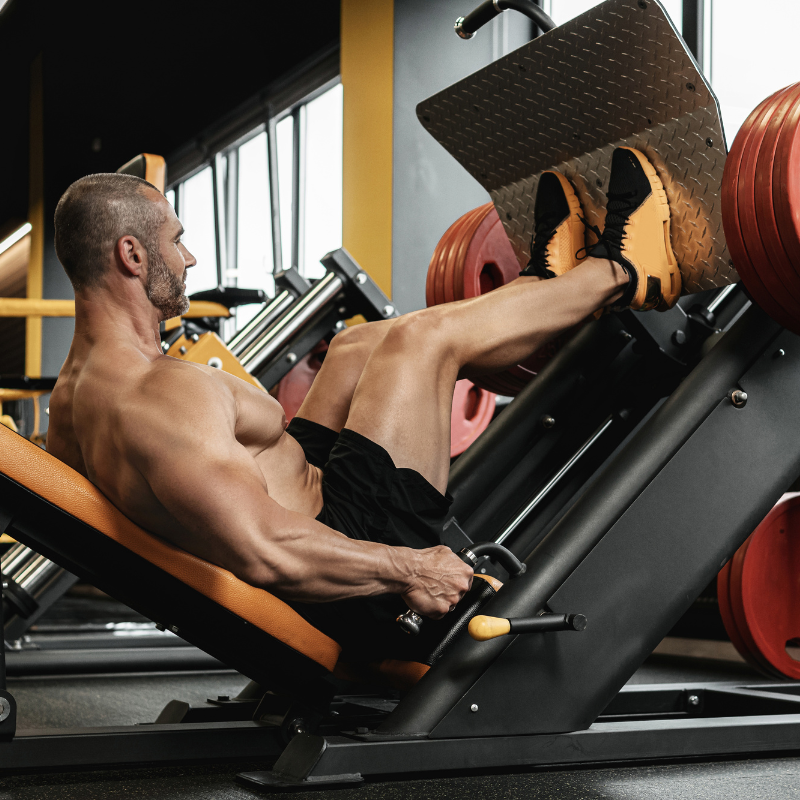
A low foot placement emphasizes the quadriceps. The lower position increases knee flexion, which recruits more of the front-thigh muscles. Keep your knees tracking over your toes and avoid letting them travel too far forward to protect the knee joints.
Wide Stance
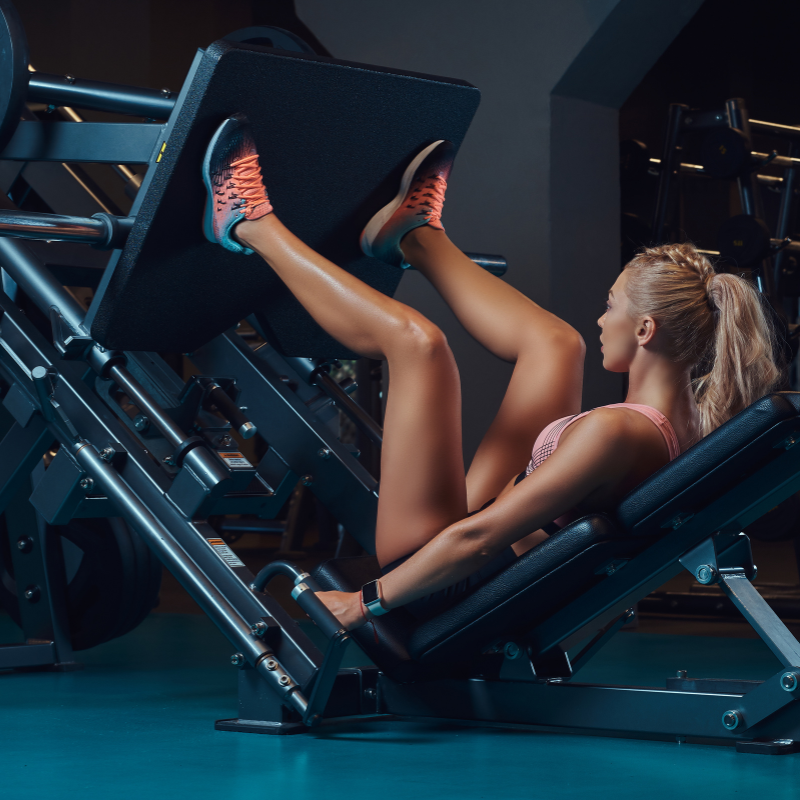
A wide stance, with your feet set wider than your hips, targets the inner thighs (adductors), glutes, and hamstrings. It also opens up the hips comfortably and helps engage the outer thigh muscles. Wide placement is useful for hip mobility and adductor development.
Narrow Stance
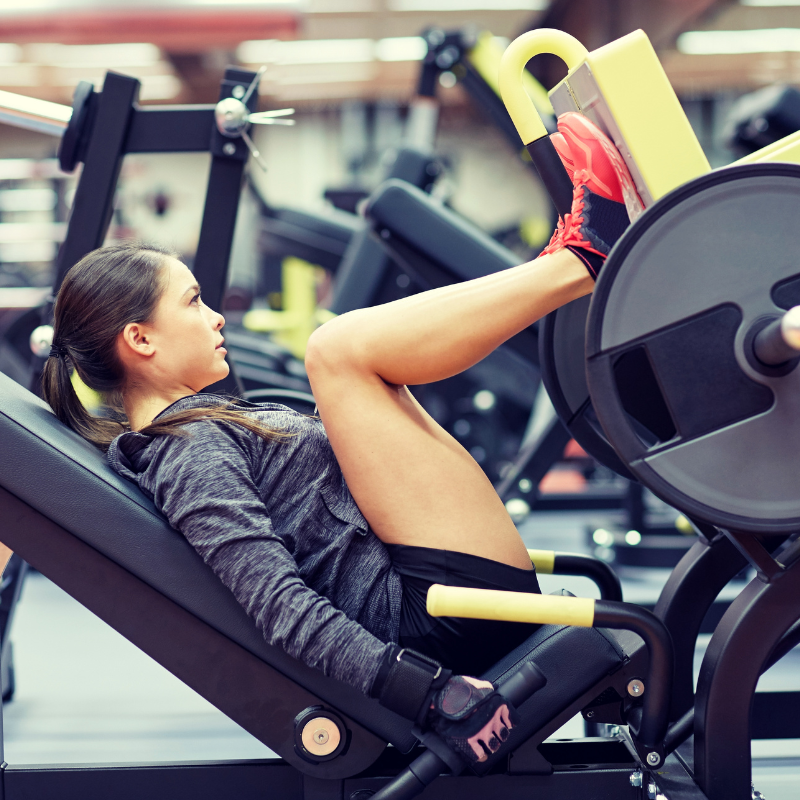
With your feet closer together, the narrow stance emphasizes the outer quad muscles and changes the hip-extension angle. It is a great way to add variety to your leg training and sculpt the outer sweep of the thighs.
Leg Press Foot Placement Chart
Use this quick reference to match your foot position to the muscles you want to train.
|
Foot Position |
Muscles Targeted |
Best For |
|---|---|---|
|
High on the platform |
Hamstrings, glutes |
Posterior chain, glute development |
|
Low on the platform |
Quadriceps |
Quad size and strength |
|
Wide stance |
Inner thighs, glutes, hamstrings |
Adductors, hip mobility |
|
Narrow stance |
Outer quads |
Outer-thigh sweep, variety |
|
Standard (hip width) |
Balanced quads, glutes, hams |
General leg development |
How to Choose the Best Foot Position for Your Goals
For Bigger Quads
To build powerful, defined quads, use a standard or low foot placement with your feet about hip-width apart or slightly narrower. Focus on a full range of motion to fully engage the front-thigh muscles.
For Hamstrings and Glutes
To strengthen the hamstrings and glutes, use a high foot placement or a wide stance. Set your feet high on the platform or wider than shoulder-width, and drive through your heels to fully activate the posterior chain.
Leg Press Form and Safety Tips
-
Track your knees: keep your knees in line with your toes and do not let them cave inward under load.
-
Protect your lower back: keep your hips and lower back flat against the pad. If your pelvis rounds under at the bottom, reduce your range or the weight.
-
Control the range: lower under control to a depth you can manage with good form, then press through your heels and midfoot.
-
Do not lock out hard: stop just short of fully locking your knees at the top to keep tension on the muscles and protect the joints.
Leg Press Machines from Powertec
Build your lower body at home with Powertec leg press machines, with flexible financing to fit your budget.
Powertec Leg Press
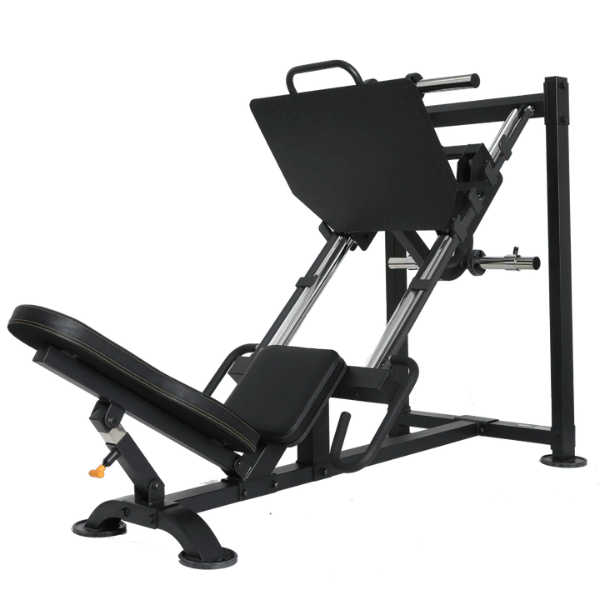
The Powertec Leg Press is a high-capacity, space-efficient machine ideal for home gyms. It features dual safety catches, a large 29 x 22-inch footplate that supports every foot position in this guide, an adjustable backrest, and three lock settings for different user heights, so you get a safe, full range of motion.
Want squats and presses in one footprint? The Leg Press Hack Squat Combo pairs a leg press with a hack squat for even more lower-body variety.
Compact Leg Sled
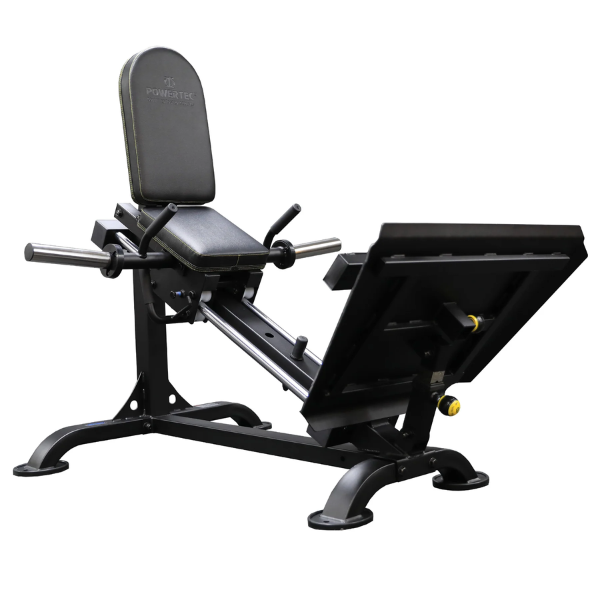
The Powertec Compact Leg Sled is designed for space-saving efficiency without sacrificing quality, perfect for home gyms with limited room. It delivers a powerful leg press workout and full lower-body training to build strength and mobility.
Frequently Asked Questions
What does foot placement on the leg press change?
Foot placement changes which muscles the leg press trains. A high position targets the hamstrings and glutes, a low position emphasizes the quads, a wide stance hits the inner thighs and glutes, and a narrow stance works the outer quads.
What is the best leg press foot placement for glutes?
A high foot placement is best for the glutes, because it increases hip extension and shifts the load onto the glutes and hamstrings. A wide stance also recruits the glutes well.
What is the difference between high and low foot placement on the leg press?
A high foot placement emphasizes the hamstrings and glutes with more hip movement, while a low foot placement emphasizes the quads with more knee flexion. Rotating between them trains the whole leg.
How often should I change my foot position on the leg press?
Rotate placements every few weeks to avoid plateaus, target different muscles, and address imbalances. Stay consistent long enough to judge each position's impact on your leg development before switching again.
Can I combine different foot positions in one workout?
Absolutely. Varying foot positions within a session gives you complete lower-body training. Combine standard, wide, narrow, high, and low placements to hit diverse muscles, then adjust the weight and keep good form for each variation.
Build Stronger Legs at Home
Dialing in your leg press foot placement is the easiest way to target the exact muscles you want to grow. The Powertec Leg Press gives you the capacity, footplate, and adjustability to train every position safely.
Shop the Powertec Leg Press and build stronger legs at home. Questions? Call our team at (800) 250-6665.
Leave a comment