




 Showcasing 29+ Years of Innovation in Strength Training Equipment

Your bench press grip is one of the biggest levers you have over the lift. It decides how much work goes to your chest versus your triceps, how stable the bar feels, and how much stress lands on your shoulders. Master the right grip and every rep gets safer and more effective.
The bench press is a staple in strength and bodybuilding programs because it works multiple muscle groups at once. This guide breaks down the three main bench press grips, when to use each one, and the form tips that keep you pressing safely and strong.
How the Bench Press Grip Affects Your Training
The bench press works the chest, triceps, and front deltoids. It is a versatile lift that responds to small changes, and grip is the easiest variable to adjust. Move your hands in or out and you shift the emphasis between chest and triceps. Keep the grip and form dialed in and you activate more muscle while protecting your joints.
The 3 Types of Bench Press Grips
There are three main grips you can use on the bench press: standard, close, and wide. Each changes the muscles you emphasize and how much you can lift.
Standard Grip
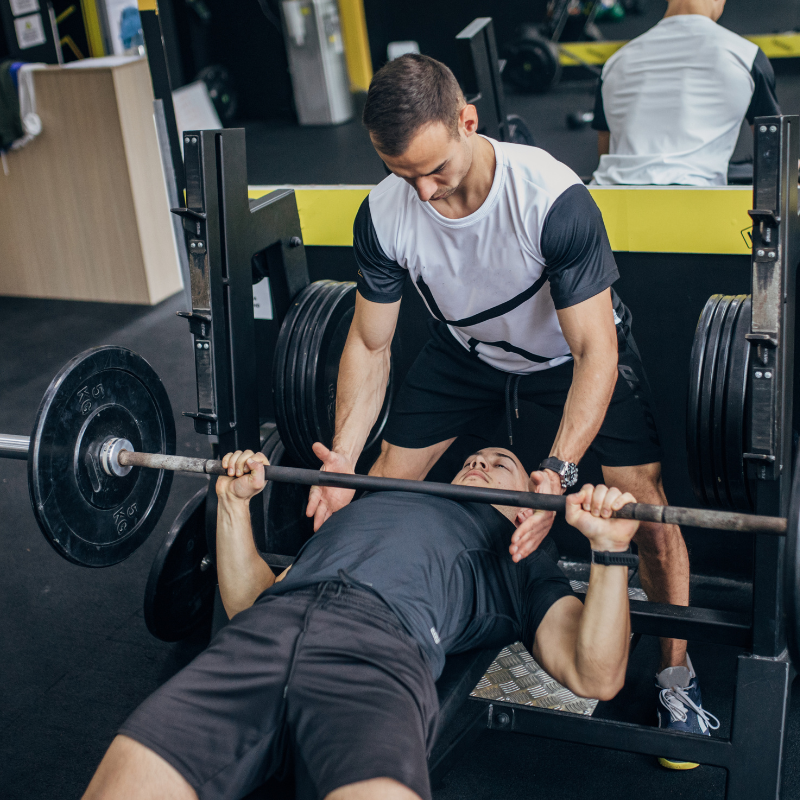
The close-grip bench press places your hands closer than shoulder-width apart. It shifts the work toward the triceps, making it a great choice for building arm strength and pressing power. You will not lift as much as with a standard grip, so choose your weight accordingly.
Wide Grip

The close grip bench press is a popular variation.
Your hands should be placed closer together than in the standard grip, typically less than shoulder-width apart. This type of grip targets the triceps more than the chest muscles. It's an excellent choice if you're looking to beef up your arm strength or focus specifically on your triceps. You will not be able to lift as much weight as with your standard grip bench press, so choose your weight appropriately.
Wide Grip

A wide-grip bench press places your hands wider than shoulder-width apart. This emphasizes the pectorals and takes some load off the triceps, which makes it popular for chest development. A wide grip can place more stress on the shoulders, so use it with control and good form.
Bench Press Grip Comparison
|
Grip |
Hand Width |
Muscles Emphasized |
Best For |
|---|---|---|---|
|
Standard |
About shoulder-width |
Chest, triceps, front delts (balanced) |
General strength, beginners |
|
Close |
Inside shoulder-width |
Triceps (and inner chest) |
Arm strength, lockout power |
|
Wide |
Wider than shoulders |
Chest (pectorals) |
Chest development |
Which Bench Press Grip Should You Use?
Pick your grip based on your goal, not just habit.
-
Building overall strength: use the standard grip as your main press and rotate the others in as accessories.
-
Bigger, stronger triceps: program the close grip, either as a main lift or a second pressing movement.
-
Chest development: add wide-grip work, but keep the load controlled to protect your shoulders.
Many lifters use all three across a training week. Whatever grip you choose, keep it consistent within a set so the bar path stays stable.
Tips for a Safe and Effective Bench Press
To get the most from the bench press and stay injury-free, follow these tips:
-
Warm up thoroughly: stretch the triceps and shoulders, run through some rotator cuff work, and do one to two lighter sets before your working weight.
-
Use a spotter or safeties: when lifting heavy, a spotter helps you push past your limits safely. Training alone? A Roller Smith Machine or a rack with safety arms lets you press heavy without one.
-
Keep a firm grip: wrap your thumbs around the bar and grip tight so the load spreads evenly across your palms, whatever grip width you use.
-
Control every rep: do not bounce the bar off your chest. Lower and press under control to build more muscle and reduce injury risk.
Common Bench Press Grip Mistakes to Avoid
A few grip-related mistakes can stall your progress and raise your injury risk. Watch for these:
-
Incorrect hand spacing: hands too close or too wide reduce muscle activation and can strain the joints. Set your width for the grip you intend to train.
-
Flaring the elbows: keep your elbows at roughly a 45-degree angle from your body rather than flared straight out, which stresses the shoulders.
-
Bending the wrists: keep your wrists straight and stacked over your forearms. A bent-back wrist leaks power and invites strain.
-
Using a thumbless grip: the thumbless or false grip lets the bar roll out of your hands. Always wrap your thumbs around the bar for a safe, secure hold.
Enhancing Your Bench Press: Powertec's Workbench Olympic Bench
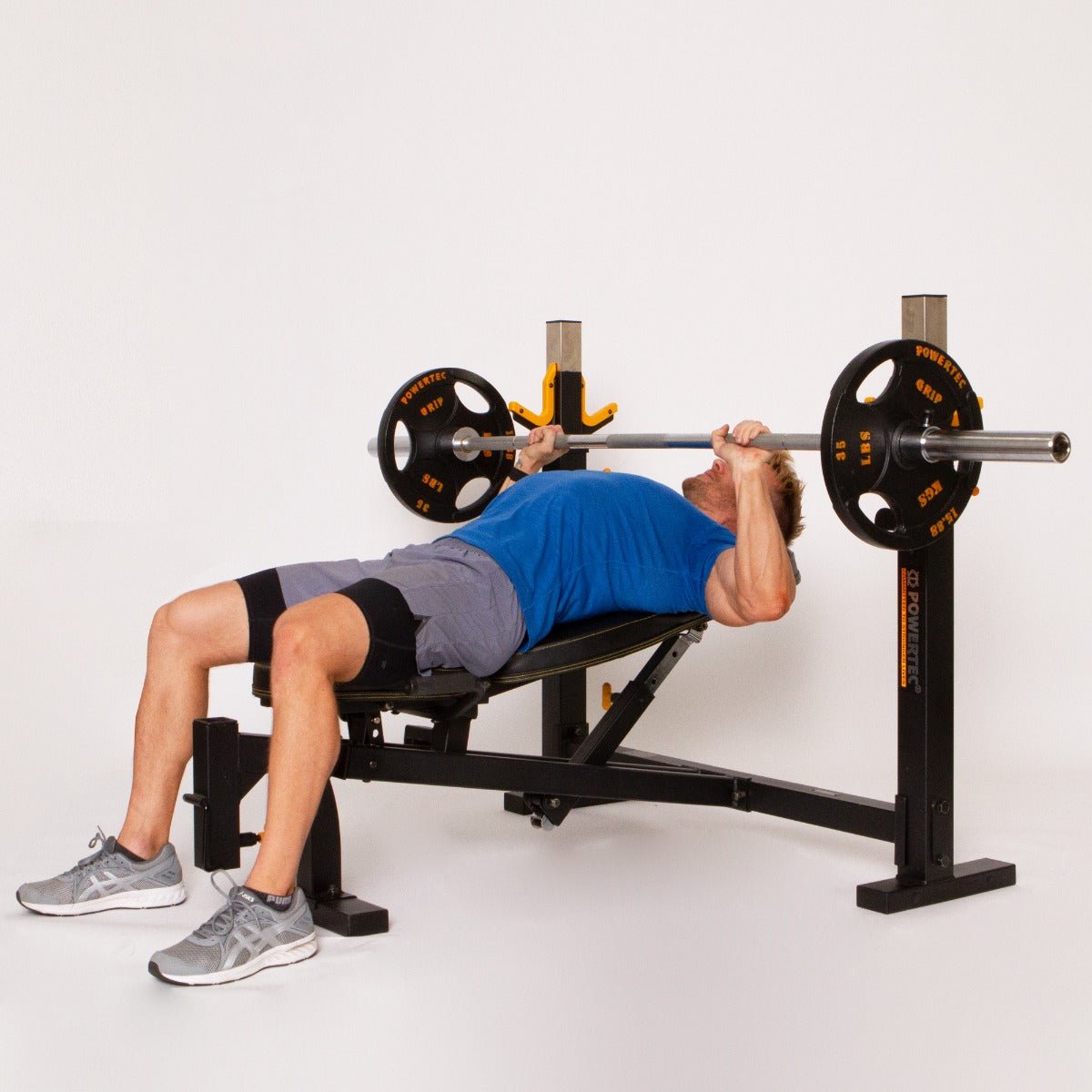
The Powertec Workbench Olympic Bench is built for a complete pressing workout. Its fully adjustable flat, incline, and decline positions support every bench press grip, and its heavy-duty design keeps you stable and safe under load.
The bench also includes an adaptor for Powertec Attachments, so you can expand your exercise options and build a full pressing station over time.
Frequently Asked Questions
What is the best bench press grip?
There is no single best grip. A standard, shoulder-width grip is the most balanced and the best starting point. Use a close grip to emphasize the triceps and a wide grip to emphasize the chest, based on your goal.
What is the ideal hand spacing for a bench press?
Hand spacing depends on your comfort and goals. A standard grip with hands about shoulder-width apart offers a balanced workout, while adjusting your grip targets specific muscles more intensely.
How does grip width affect the bench press?
Grip width changes which muscles are emphasized. A wide grip focuses more on the chest, a close grip places more emphasis on the triceps, and a standard grip balances chest and triceps.
Does a close-grip bench press work triceps more than chest?
Yes. Bringing your hands inside shoulder-width shifts more of the load onto the triceps, which is why the close grip is a favorite for building arm strength and lockout power.
Should I use a thumbless (false) grip on the bench press?
No. A thumbless grip lets the bar slip off your hands and is a common cause of serious accidents. Always wrap your thumbs around the bar.
Press Stronger at Every Grip
The right bench press grip, dialed-in form, and a stable bench are what turn the bench press into real, lasting strength. The Powertec Workbench Olympic Bench gives you the adjustable, heavy-duty platform to press safely at every grip.
Shop the Workbench Olympic Bench and build a stronger press at home. Questions? Call our team at (800) 250-6665.
Leave a comment