




 Showcasing 29+ Years of Innovation in Strength Training Equipment

Warming up before exercise is important because it prepares your body to train safely and perform at its best. A few minutes of warming up raises your core temperature, loosens your joints, and gets blood flowing to your muscles, which lowers your risk of injury and helps you lift more with better control.
Below, we break down exactly why a warm-up matters, what happens when you skip it, and how to warm up properly before lifting.
Why Warming Up Before Exercise Matters

Injury Prevention
Injury prevention is the first reason to warm up before lifting weights. A proper warm-up raises your core temperature, lubricates the joints, and increases muscle flexibility, which minimizes the chance of strains and other exercise-induced injuries.
Improved Performance
As your body temperature rises, your muscles become more supple and responsive, so you can lift heavier with more power and control. Better blood flow also delivers oxygen and nutrients to your muscles more efficiently, fueling greater endurance and strength.
Increased Flexibility and Mobility
Warming up extends your range of motion, which leads to better exercise execution, like deeper squats and full extensions. Consistent warm-ups also support muscle development and help prevent imbalances.
Sharper Mental Focus
A warm-up is also a moment to focus and clear your head, aligning your mind and body before you train. That focus on form, breathing, and the mind-muscle connection helps you push through tough sets safely.
What Happens If You Skip Your Warm-Up?
Jumping straight into heavy lifting with cold muscles raises your risk of strains, pulls, and joint irritation. You will also feel weaker and stiffer, since your muscles are not yet primed to fire efficiently. Skipping the warm-up rarely saves time in the long run, because an injury can cost you weeks of training.
How to Warm Up Before Lifting
A good warm-up combines light cardio, dynamic stretching, and activation work. A simple routine looks like this:
-
Light cardio (3 to 5 minutes): brisk walking, jogging, or an elliptical to raise your heart rate and get blood flowing.
-
Dynamic stretching: active movements like arm circles and leg swings that mirror the workout ahead and open up your range of motion.
-
Activation exercises: bodyweight squats and push-ups to wake up the muscles you are about to train.
-
Warm-up sets: a light set or two of your first lift before you add working weight.
Dynamic movements are better than long static stretches before lifting, since static stretching a cold muscle can temporarily reduce power. Save the longer static stretches for after your session.

Warming Up in Your Home Gym
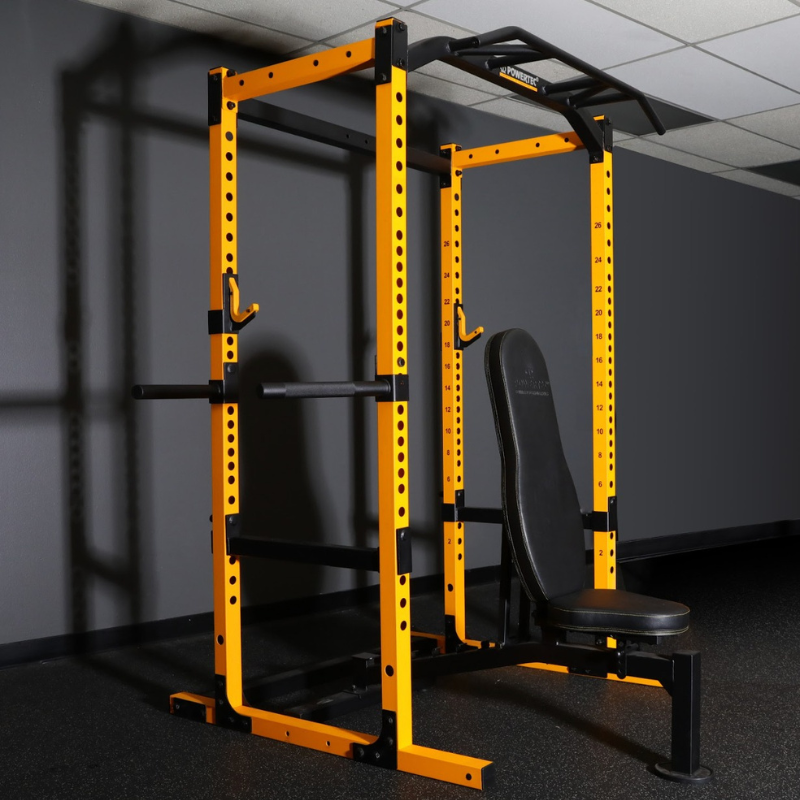
Powertec racks and attachments make warming up at home easy. With the Workbench® Power Rack, for example, you can run bodyweight squats to prime your lower body, or attach bands for resistance-assisted stretching. The versatility of Powertec attachments lets you warm up every muscle group before you lift. For a full setup, see our guide to the best home gym fitness equipment.
Tips for a Better Warm-Up
-
Mind the duration and intensity: aim for about 10 to 20 minutes, starting light and building gradually so you prepare the body without causing fatigue.
-
Listen to your body: spend more time on areas that feel tight or sore, and adjust the length based on how you feel, as long as every muscle group you plan to train is warmed up.
Warm Up, Then Train Hard
A few minutes of warming up sets up a safer, stronger session every time. Build your setup with the Powertec strength collection, with flexible financing available. Questions? Call our team at (800) 250-6665.
Weightlifting Warm-Up FAQs
Why is warming up before exercise important?
Warming up is important because it raises your body temperature, increases blood flow, and loosens your joints and muscles. That lowers your risk of injury and lets you train with more strength, control, and focus.
How long should my warm-up be?
A warm-up of about 10 to 20 minutes works well for most lifters. That gives you time for light cardio, dynamic stretching, and activation exercises without building up fatigue before your working sets.
Can I skip my warm-up if I'm short on time?
It is not advisable. If you are pressed for time, do a shorter warm-up focused on dynamic movements for the muscles you will train. Even a few minutes is far better than none for getting your blood flowing and your muscles ready.
Is stretching the same as warming up?
Not quite. Dynamic stretching is part of a warm-up, but a full warm-up also includes light cardio and activation work. Long static stretches are best saved for after your workout, not before lifting.
What happens if you don't warm up before lifting?
Lifting with cold muscles raises your risk of strains and joint irritation, and you will feel weaker and stiffer. Over time, skipping warm-ups makes injuries more likely, which can set your training back.
Leave a comment