




 Showcasing 29+ Years of Innovation in Strength Training Equipment

Lat pulldowns are a staple exercise for building a strong, muscular back.
The lat pulldown works your lats, upper back, and arms, and the grip you choose decides which of those muscles do the most work. That is why lifters who want a wider, thicker back learn to use more than one grip.
In this post, we’ll break down exactly which muscles the lat pulldown works, then show you how wide, close, reverse, neutral, and mixed grips shift the emphasis so you can train your back from every angle.
What Muscles Does the Lat Pulldown Work?
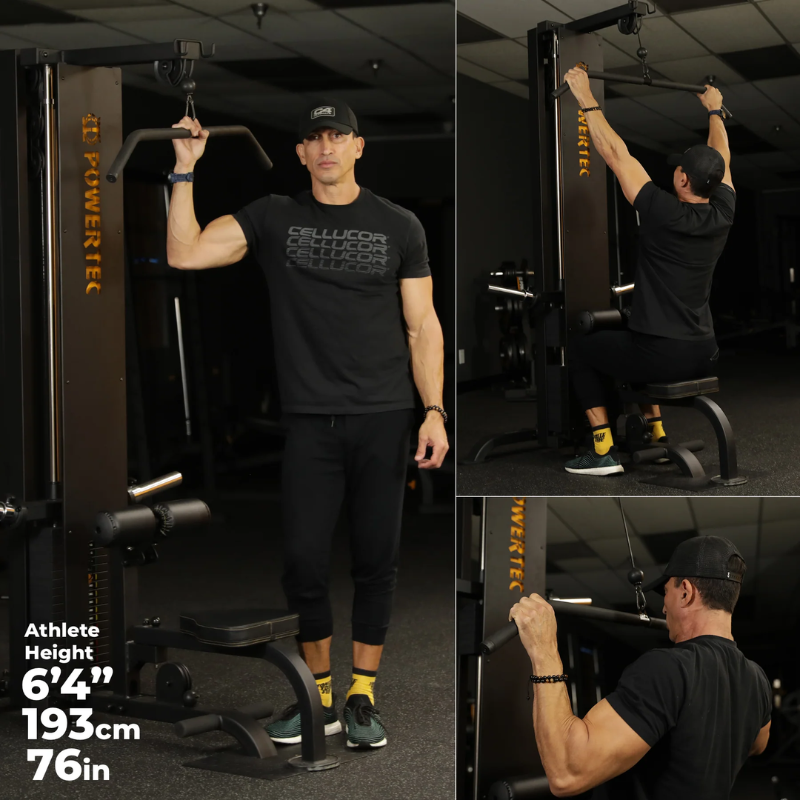
The lat pulldown is a compound pulling exercise, so it recruits several muscles at once. Here is what is doing the work on every rep.
Primary mover
-
Latissimus dorsi (lats): the large fan-shaped muscles that run down each side of your back. They drive the pull and build the V-taper width.
Assisting back muscles
-
Teres major: works with the lats to pull the arms down and back.
-
Rhomboids and mid and lower trapezius: retract and depress the shoulder blades, adding mid-back thickness.
-
Rear deltoids: assist as the upper arms drive down toward the torso.
-
Rotator cuff: stabilizes the shoulder throughout the movement.
Arms and grip
-
Biceps and brachialis: flex the elbow to help pull the bar down.
-
Forearm flexors: hold the bar and control the load.
Stabilizers
-
Core and abs: keep your torso still so the back does the work, not momentum.
The takeaway: the lat pulldown is a back-dominant exercise, but your arms and core are always involved. The grip you use is the dial that decides how much each muscle contributes.
How Grip Changes the Muscles Worked
Every grip trains the same movement pattern, but small changes in hand position and width change which muscles get the most tension. Rotating grips is the simplest way to hit your back from multiple angles and build balanced strength.
Wide-Grip Lat Pulldown
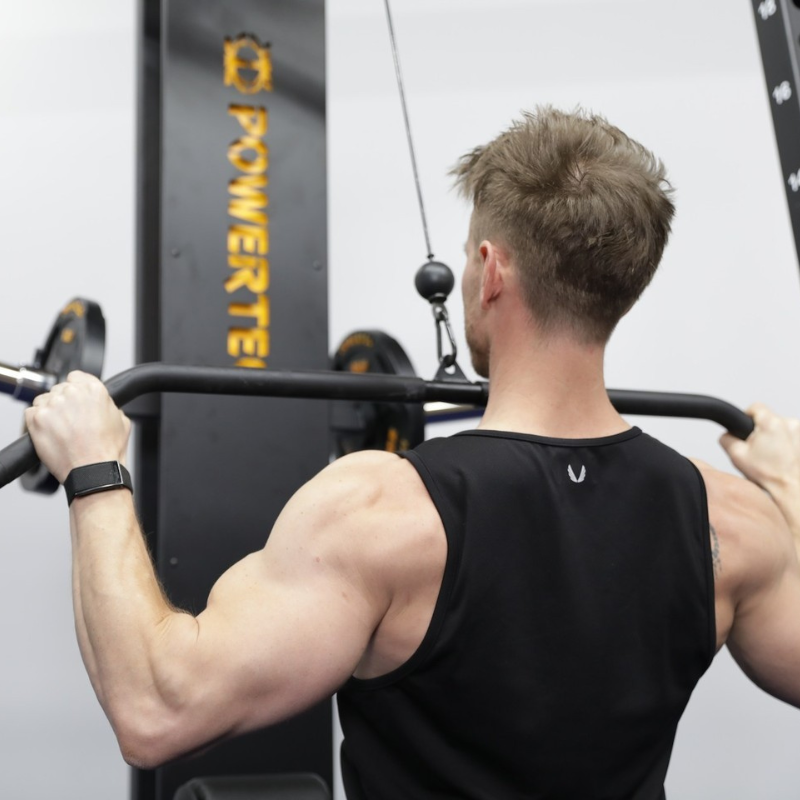
Muscles emphasized: outer lats and upper back.
Grip the bar wider than shoulder-width with palms facing forward. A wider grip lets your shoulder blades pull together as the bar comes down, so you fully contract the lats and build width. Keep your chest lifted and avoid swinging or leaning back.
Close-Grip Lat Pulldown

Muscles emphasized: lower and mid lats, with more biceps involvement.
The close grip (sometimes called the narrow grip) places your hands closer than shoulder-width. Pull the bar to your upper chest with your elbows tucked near your sides, then squeeze your shoulder blades together at the bottom. This grip adds thickness through the mid-back.
Reverse-Grip Lat Pulldown

Muscles emphasized: lower lats and biceps.
Take an underhand grip, palms facing you, slightly inside shoulder width. Pull the bar down until your upper arms are perpendicular to the floor, then pause for one to two seconds. Control the bar on the way up to maximize time under tension, and keep your elbows tucked so the lats stay in charge.
Neutral-Grip Lat Pulldown
Muscles emphasized: lats and mid-back, with a shoulder-friendly wrist position.
Using a parallel (neutral) handle keeps your palms facing each other. This grip balances lat and mid-back work and is easier on the shoulders and wrists, which makes it a good option on heavier sets or if overhand grips bother your joints.
Mixed-Grip Lat Pulldown
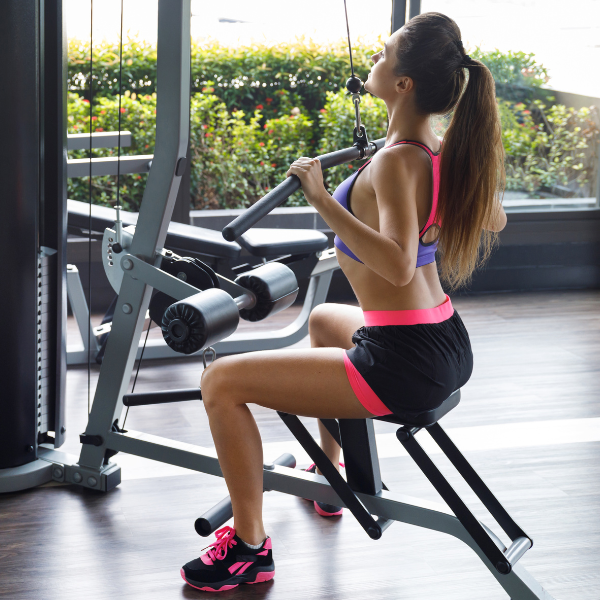
Muscles emphasized: distributes load across both sides of the back.
This variation uses one underhand and one overhand grip. Focus on pulling with your back rather than your arms, and keep your torso stationary. For symmetry, switch which hand goes underhand each set so you train both sides evenly.
Benefits of Using Different Lat Pulldown Grips
Rotating your grip is not just variety for its own sake. It delivers real training benefits.
-
Trains the back from every angle: different grips recruit different muscles, so you develop the lats, upper back, and lower lats more completely.
-
Protects your joints: rotating grips reduces repetitive stress on the shoulders, elbows, and wrists.
-
Keeps progress coming: hitting the back from new angles keeps the stimulus fresh and helps you avoid plateaus.
How to Program Grip Variations
To build a strong, balanced back, work more than one grip into your routine. Two simple approaches:
-
Option 1, one grip per session: perform 3 sets of 8 to 12 reps with a single grip, then switch grips next session.
-
Option 2, rotate within a session: do one set wide, one set close, one set reverse, and so on.
Listen to your body and adjust grips if anything feels uncomfortable. Changing grips every two to three weeks is a good baseline for continued back development.
Frequently Asked Questions
What muscles does the lat pulldown work?
The lat pulldown mainly works the latissimus dorsi, with help from the teres major, rhomboids, mid and lower trapezius, and rear delts. Your biceps, forearms, and core assist on every rep.
Do different lat pulldown grips work different muscles?
Yes. A wide overhand grip emphasizes the outer lats and upper back, a close or reverse grip shifts work to the lower lats and biceps, and a neutral grip balances lats and mid-back while being easier on the joints.
Which lat pulldown grip is best for wider lats?
The wide overhand grip is best for building lat width, because it lets the shoulder blades fully retract and contract the outer lats.
Is the lat pulldown a back or an arm exercise?
It is a back-dominant compound exercise. The lats and upper back drive the movement, while the biceps and forearms assist.
How often should I change my lat pulldown grip?
Change your grip at least every two to three weeks, or rotate grips within a workout. Regular variation improves muscle activation and helps prevent overuse.
Train Every Grip at Home with the Powertec's Lat Machine
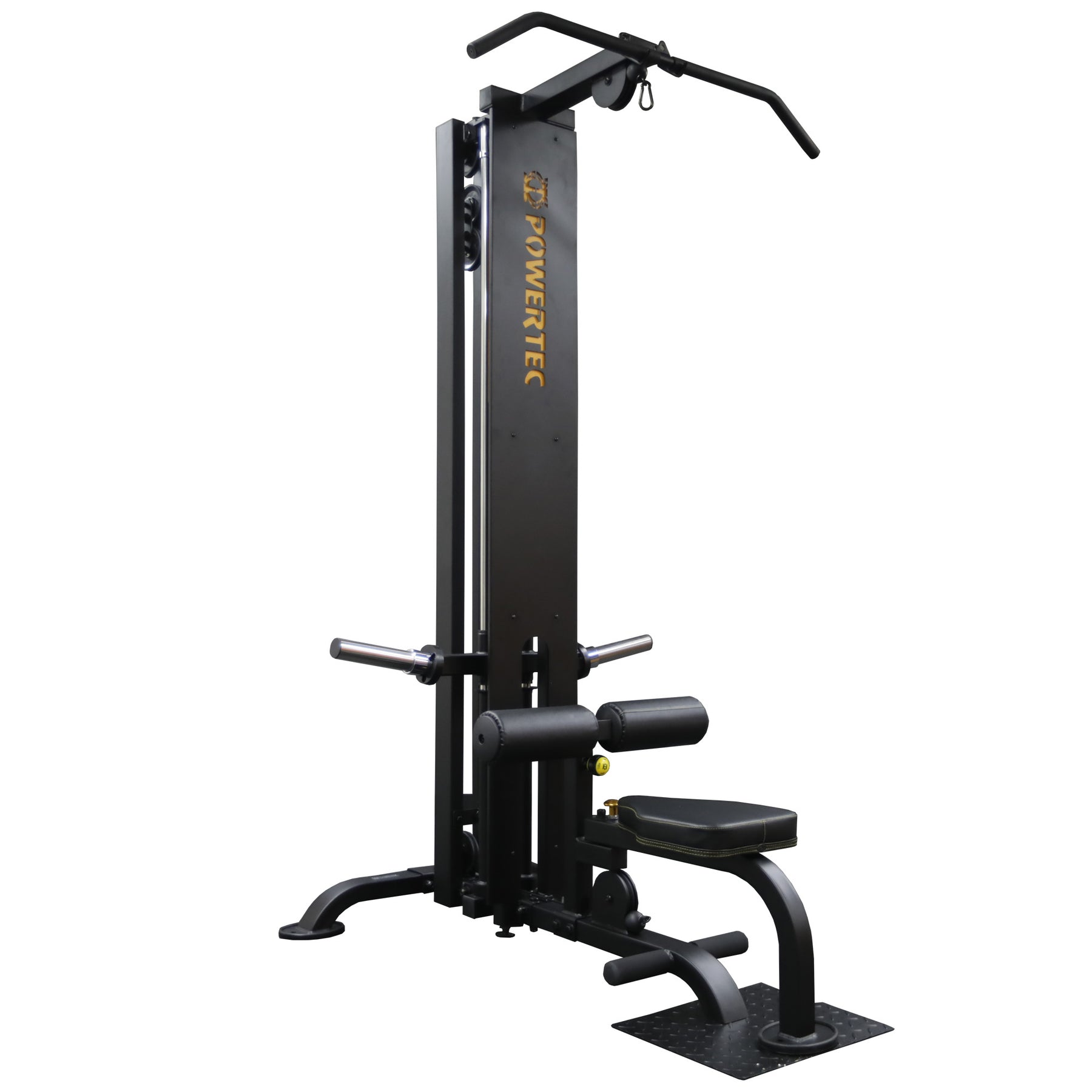
Take your lat pulldown workout to the next level by equipping your gym with a Powertec Lat Machine.
Features and Specifications
-
Plate-loaded design with high weight capacity; an additional 190 lb weight stack is available
-
Angled stainless steel weight horns for secure plate loading
-
Multiple attachments included: Lat Pulldown Bar, Short Bar, Extension Chain + 3 carabiner clips
-
Dimensions: 55.3" x 39.3" x 82.1"
With smooth pulleys, heavy-duty construction, and optional accessories, our Lat Machine enables you to perform all the grip variations safely and effectively.
Already own a Workbench® system? The Workbench® Lat Tower Attachment adds full lat pulldown training to your setup.
Call our team at (800) 250-6665 and upgrade your home or commercial gym today.
Leave a comment